
The 509 Public Sector
Training Program
The courses in our Training Program are free for SEIU Local 509 Public Sector state workers. We offer live trainings (in person or virtually) and self-paced learning on virtual platforms.


Register for a Live Training
Enhance your skills and take the next step to success!


Register in 3 Easy Steps!
Click on the arrow next to the training name to open the description.
Click on the registration link at bottom of the description.
Fill out the online registration form.
After registering, you’ll receive a confirmation email within one business day. Please note, ADA accommodations are available upon request. Simply indicate the accessibility services you need on the training registration form at least 2 weeks before the training date. Take the first step and explore upcoming trainings below!
Didn’t receive a confirmation email or need help registering? Please Contact Us

Advanced Practice Institute
Our Advanced Practice Institute offers career-focused programs that help workers access certifications, CEUs, PDPs, and other training and professional development focused on career specialization.
Open the description of the training to find the registration link.
-
Date: September 24, 2026
Time: 9:30 a.m. - 12:30 p.m.
Trainer: Suzy Langevin, LICSW, LADC I
Location: Virtual on Zoom
The training will provide an overview of the Illness Management and Recovery practice, including the importance of integrating a recovery-oriented philosophy into the delivery of the model.
IMR is an evidence-based practice created for people who experience symptoms related to Schizophrenia, Bipolar, Schizoaffective, and Depression. This manualized treatment that supports people in setting personalized goals, and application of various skills learned in the eleven topic areas covered in the treatment. Practitioners use a variety of best practices that support this process, including Psychiatric Rehabilitation, CBT, Motivational Enhancement and Educational strategies.
The IMR model is rooted in empowerment, helping people envision their future with hope and possibility. IMR teaches participants skills in problem solving, goal setting, and self-management strategies.
With over 15 years of experience implementing IMR in a variety of treatment settings, our trainer emphasizes a balance between personalized, creative interventions and fidelity to the practice and aims to help all participants develop their unique style as an IMR practitioner.
Following this training the participants will understand:
The core ingredients of the IMR practice.
The main take-home messages of the practice.
Key elements of fidelity to the IMR model.
Examples of what the IMR looks like in practice.
Ideas on providing this treatment in various settings.
Credits:
3 CE credits approved for Certified Rehabilitation Counselors and MA Licensed Mental Health Counselors
2.5 CE credits approved for MA Social Workers
-
Date: September 29, 2026
Time: 9:30 - 11:30 a.m.
Trainer: Elizabeth Korchari, M.A., LMHC, DBT-LBC, RMT
Location: Virtual on Zoom
Validation is one of the most powerful interpersonal skills for building trust, strengthening relationships, and reducing emotional distress. Whether supporting individuals experiencing mental health challenges, trauma, substance use disorders, developmental disabilities, or everyday life stressors, helping professionals have countless opportunities to influence outcomes through the way they respond. This training explores the principles and practice of validation while providing participants with practical strategies for responding in ways that foster connection, emotional safety, and meaningful change.
Following this training the participants will understand:
Explain the purpose and benefits of validation in building trust, strengthening relationships, and supporting emotional regulation.
Differentiate validation from agreement, approval, reassurance, advice-giving, and problem-solving.
Identify common invalidating communication patterns and describe their impact on emotional distress and helping relationships.
Apply practical validation strategies, including Marsha Linehan's Six Levels of Validation, during interactions with individuals experiencing emotional distress.
Demonstrate effective validation skills through discussion, case examples, and structured practice.
Credits:
2 CE credits approved for Certified Rehabilitation Counselors
2 CE credits approved for MA Licensed Social Workers
Application for CE credits for Licensed Mental Health Counselors has been submitted. Contact us at info@509training.org for more information.
-
Date: October 8, 2026
Time: 9:30 a.m. - 12:30 p.m.
Trainer: Jorge C. Armesto, Ph.D., C-IAYT
Location: Virtual on Zoom
Mindful Self-Compassion (MSC) is a structured psychoeducational approach developed by Kristin Neff and Christopher Germer that draws on a robust and growing body of empirical research. Self-compassion, defined as treating oneself with kindness and understanding in the face of personal failure or suffering rather than harsh self-judgment, has been operationalized through Neff's (2003) Self-Compassion Scale and studied across hundreds of peer-reviewed investigations. Research consistently links higher self-compassion with reduced symptoms of anxiety, depression, and rumination, as well as greater emotional resilience, life satisfaction, and motivation. Neuroimaging studies further suggest that self-compassion activates caregiving and affiliation systems in the brain—distinct from self-esteem—making it a uniquely sustainable resource for psychological well-being.
The MSC program itself has been evaluated in randomized controlled trials demonstrating significant improvements in self-compassion, mindfulness, and compassion for others, alongside reductions in depression, anxiety, stress, and emotional avoidance among participants. These gains have shown durability at one-year follow-up. The Core Skills format distills the foundational practices of the full eight-week MSC curriculum—including the self-compassion break, soothing touch, and loving-kindness meditation—into an accessible workshop experience, making evidence-based self-compassion skills available to a broader clinical and community population. For mental health professionals, competency in these skills supports trauma-informed, compassion-focused care and complements established modalities such as Cognitive Behavioral Therapy, Dialectical Behavior Therapy, and Acceptance and Commitment Therapy.
Learning Objectives:
Participants will be able to identify and describe the three core components of self-compassion (self-kindness, common humanity, and mindfulness) and explain how each contributes to emotional well-being and resilience.
Participants will be able to apply at least two mindfulness-based practices introduced in the workshop to recognize and respond to personal suffering, stress, or self-critical thoughts with greater awareness and equanimity.
Participants will be able to apply self-compassion practices as tools for reducing burnout, enhancing emotional regulation, and supporting overall well-being in both personal and professional or caregiving contexts.
Credits:
3 CE credits approved for Certified Rehabilitation Counselors
Applications for CEUs for MA Social Workers and MA Licensed Mental Health Counselors have been submitted. Please contact us at info@509training.org with questions.
-
Date: October 14, 2026
Time: 9:30 a.m. - 12:30 p.m.
Trainer: Ayala Livny, M.Ed, MHC and Liz Geisel, MSW
Location: Virtual on Zoom
Working in human services means consistently showing up for others in need - even while navigating systems that often fall short of meeting the demands and challenges of the work. This session explores the personal and systemic impacts of trauma-exposed work, including compassion fatigue, burnout, vicarious trauma, and moral injury. Participants will examine what is - and isn’t - within their control, and reflect on the emotional toll of caring in the face of systemic limitations. Through interactive activities, breakout discussions, and large-group conversations, participants will explore practical strategies for sustainability - fostering personal well-being and building the capacity to stay grounded and committed for the long haul.
Following this training the participants will be able to:
Describe the personal and systemic impacts of trauma-exposed work, including compassion fatigue, burnout, vicarious trauma, and moral injury.
Differentiate between factors that are within their control and those that are shaped by organizational or systemic constraints.
Analyze the emotional and ethical toll of sustained caring in high-need, under-resourced environments.
Apply practical strategies to support personal sustainability, emotional grounding, and long-term engagement in human service work.
Credits:
3 CE credits approved for Certified Rehabilitation Counselors
Applications for CEUs for MA Social Workers and MA Licensed Mental Health Counselors have been submitted. Please contact us at info@509training.org with any questions.
-
Date: October 15, 2026
Time: 10:00 a.m. - 12:00 p.m.
Facilitator: Amy Ebbeson, Trauma Specialist, Licensed Social Worker, and Kelsey Hopkins, Public Health Professional and International Development and Social Change Scholar
Location: Virtual on Zoom
Human service agencies often serve clients who have experienced trauma. However, most front-line staff are not clinically trained to respond to the trauma experienced by clients and are often left feeling helpless when clients share their experiences. In this interactive workshop, participants will gain a foundational understanding of how trauma impacts individuals and learn helpful strategies to navigate conversations with clients. In addition, participants will learn and practice with empowering tools and strategies for building resilience and self-compassion while supporting clients.
Learning Outcomes:
Increase understanding about the impact of trauma on individuals in relation to customer service
Recognize manifestations of trauma in customer interactions and build on de-escalation skills
Identify and practice self-regulation strategies to support emotional well-being in customer interactions
-
Date: October 21, 2026
Time: 9:30 a.m. - 12:30 p.m.
Facilitator: Debra Berglin, LICSW
Location: Virtual on Zoom
Feeling anxious about doing home or community-visiting? Having the skills and strategies to maintain your safety and feel comfortable enough to conduct a positive and productive home or community visit are the keys. Join us to learn from others experienced home visitors in various fields of social service about what they have done to protect their safety and well-being over years of home-visiting. You will learn specific strategies for working with those with trauma and substance use challenges, trusting your gut, assessing safety, and taking action to calm down an escalating situation. In addition, you will learn how to recognize and respond to vicarious trauma in yourself and in your colleagues.
Learning Outcomes:
To learn at least 3 new strategies for assessing and managing safety during home/community visiting
To gain knowledge from other seasoned professionals in the field about how their experiences honed their home visiting skills over the years
To learn about vicarious trauma and strategies for addressing it
-
Date: October 28, 2026
Time: 9:30 a.m. - 12:30 p.m.
Trainer: Elizabeth Korchari, M.A., LMHC, DBT-LBC, RMT
Location: Virtual on Zoom
Learning DBT skills is only the first step—knowing when and how to use them during emotionally challenging situations is often much more difficult. This training teaches participants how to effectively coach individuals in applying DBT skills in real time. Participants will learn practical strategies for recognizing coaching opportunities, prompting skill use, responding effectively during emotional crises, and fostering greater independence and confidence in using DBT skills outside of formal treatment sessions.
Following this training the participants will be able to:
Describe the purpose of DBT skills coaching and differentiate coaching from therapy, advice-giving, and problem-solving.
Identify opportunities to coach DBT skills during everyday interactions and emotionally challenging situations.
Assess an individual's readiness and willingness to use DBT skills in real time.
Select and coach appropriate DBT skills based on the individual's presenting needs and level of emotional intensity.
Demonstrate effective coaching strategies that reinforce skill use while promoting independence and self-efficacy.
Credits:
3 CE credits approved for Certified Rehabilitation Counselors
2.5 CE credits approved for MA Licensed Social Workers
Application for CE credits for Licensed Mental Health Counselors has been submitted. Contact us at info@509training.org for more information.
-
Date: October 29, 2026
Time: 9:30 a.m. - 12:30 p.m.
Trainer: Ayala Livny, M.Ed, MHC and Liz Geisel, MSW
Location: Virtual on Zoom
Harm Reduction is both a philosophy and a set of strategies for reducing the harm caused by a behavior. Though often discussed in the context of substance use or sexual risk, the philosophy and strategies can be utilized in discussions around any behavior that has a negative consequence to an individual or a community. This training will explore the history and guiding principles of Harm Reduction, and participants will explore how to develop a Harm Reduction approach in working with clients, and apply concepts and strategies in case studies.
Message from facilitators: We are looking forward to meeting you at our upcoming training. Please note that our sessions are highly participatory and interactive (we work hard not to be boring). Please plan to be on camera and in a space where you can speak in both breakout rooms and the larger group. If you have any questions, let us know - we look forward to seeing you soon!
Following this training the participants will be able to:
Describe the core principles and historical foundations of Harm Reduction.
Explain how Harm Reduction differs from abstinence-only or compliance-based approaches across a range of behaviors.
Apply Harm Reduction strategies to real-world client situations to reduce risk and promote safety.
Evaluate case examples to determine how Harm Reduction approaches can support engagement, autonomy, and incremental change.
Credits:
3 CE credits approved for Certified Rehabilitation Counselors
2.5 CE credits approved for MA Licensed Social Workers
Application for CE credits for MA Licensed Mental Health Counselors has been submitted. Please contact us at info@509training.org with any questions.
Languages and Cultures
Trainings in this category aim to expand workers’ awareness of the languages and cultures represented in the Commonwealth.
Open the description of the training to find the registration link.
-
Dates: September 2 and 23, 2026
Time: 9:30 - 11:00 a.m.
Facilitator: Debra Berglin, LICSW
Panelists: Milene Chioatto, LCSW; Patricia Oshman, Instructor at Massachusetts Maritime Academy; Raffaella Almeida, LICSW
Location: Virtual on Zoom
Overview: Having a better understanding of someone's race, ethnicity, or culture aids helpers in working from a more inclusive, respectful, and effective lens. Working from that lens often leads to more trust, better relationships, and improved outcomes. In this workshop, learn about Brazilian history, culture and customs directly from Brazilians living in the US. Participants will be invited to consider how their own culture and customs may complement or complicate your relationships with your Brazilian clients, families, or students. Panelists who are service providers will share their experience and expertise about how to effectively support people from their community, with special attention to culturally responsive care.
Learning Objectives:
Deepen understanding of Brazilian history, culture and customs
Examine intersections of culture and customs that may complement or complicate relationships
Deepen understanding of traditional Brazilian views of mental health, medical and social service support
Develop strategies to work more effectively with Brazilian individuals, families, and communities in a culturally sensitive way.
-
Dates: September 10 and 17, 2026
Time: 10:00 a.m. - 12:00 p.m.
Trainer: Signing Basics
Location: Virtual on Zoom
Overview: In this two-part workshop, participants will learn more about the culture of the Deaf and Hard of Hearing community and some functional signs to effectively communicate with Deaf and Hard of Hearing clients and their families.
Part 1: Deaf Culture: An overview of the culture and the unique characteristics found among people within the D/deaf community. Also, you will learn about the ADA, legal issues and deaf patient rights. Participants will practice with role plays on engaging with people in the D/deaf community.
Part 2: Functional Sign Language for Human Services Staff: Train with a live, experienced ASL instructor with a focus on the signs you need to communicate with colleagues and clients.
Learning Objectives:
Overview the culture and unique characteristics found among people within the D/deaf community.
Learn about the ADA, legal issues and deaf patient rights.
Practice with role plays on engaging with people in the D/deaf community in appropriate culturally responsive ways.
Finger spelling in American Sign Language
Common signs to communicate with colleagues and clients for human service contexts
-
Dates: Tuesdays & Thursdays from September 29 through November 19, 2026
Time: 4:15 - 5:15 p.m.
Trainer: Jaclyn Browning, M. Ed.
Location: Virtual on Zoom
Overview:
This 16-hour course is an introductory Spanish course that does not require any background knowledge in the Spanish language. The course is focused on practicing speaking and listening skills in Spanish in human service settings, general community outreach, and developing cultural competency for engaging with people who speak Spanish.
Attendance at 13 of 16 classes is required to earn a certificate.
Learning Objectives:
Identify words, phrases, and basic information aligned with human services work
Respond to culturally diverse colleagues, clients, and community members by expressing curiosity and empathy
Ask and respond to memorized questions
Provide simple, basic, prepared information in culturally appropriate ways
Recognize and identify factors that contribute to individual and cultural identities
-
Dates: Fridays from October 2 - 23, 2026
Time: 10:00 a.m. - 12:00 p.m.
Trainer: Signing Basics, LLC
Location: Virtual on Zoom
Overview:
In this 8-hour course, participants will learn the basics of American Sign Language, including finger lettering and common signs for communicating in human services settings.
Train with a live, experienced ASL instructor with a focus on the signs you need to communicate with colleagues and clients. This training is highly interactive and requires participants to have their cameras on to receive feedback from the instructor.
Learning Objectives:
During this training the participants will learn:
The basics of American Sign Language
Finger lettering in American Sign Language
Common signs for communicating in human services settings in American Sign Language
Wellness and Sustainability
Our Wellness and Sustainability program is centered on personal and team sustainability amid trauma stewardship and stressful caseloads. The program aims to provide resources to help workers monitor and mitigate the impact of work stress that can lead to burnout.
Open the description of the training to find the registration link.
-
Date: September 9, 2026
Time: 10:00 a.m. - 12:00 p.m.
Facilitator: Jorge C. Armesto, Ph.D., C-IAYT, Clinical Psychologist & Yoga Therapist
Location: Virtual on Zoom
Designed to introduce participants to the concept and benefits of mindfulness as a tool for well-being. This program aims to pique interest in mindfulness and encourage further exploration. It assumes that participants have no previous experience with mindfulness practices. Participants will be given tools they can use every day in a variety of settings.
Learning Outcomes:
Define mindfulness and understand its foundations in present-moment awareness and non-judgment.
Experience and reflect on core mindfulness practices (e.g., body scan, breath awareness).
Recognize the role of mindfulness in reducing stress and increasing emotional regulation.
Identify simple ways to integrate mindfulness into everyday life.
-
Date: September 18, 2026
Time: 10:00 - 11:00 a.m.
Facilitator: Jorge C. Armesto, Ph.D., C-IAYT, Clinical Psychologist & Yoga Therapist
Location: Virtual on Zoom
Work can be demanding, especially in roles shaped by high expectations, limited resources, and ongoing uncertainty. Many workers experience stress, exhaustion, and emotional strain as part of their day-to-day lives, particularly in environments affected by systemic inequities. This one-hour session is designed as a supportive space that blends practical learning with shared reflection and acknowledging the real pressures human service workers face.
Rather than a traditional lecture, the session offers participants an opportunity to pause, connect, and access tools that support emotional regulation and well-being.
Using trauma-sensitive mindfulness practices, participants will be introduced to simple, accessible strategies for noticing stress responses, grounding in the present moment, and reducing emotional overwhelm. The session also emphasizes the role of collective care, recognizing that healing and resilience are often strengthened through connection, shared experience, and mutual support.
Participants are invited to engage at their own comfort level. The session functions both as a skills-based learning experience and a drop-in support space, honoring the realities of workers’ lives while offering practical tools that can be used on the job and beyond.
Learning Outcomes:
Identify common signs of stress and emotional overload in themselves and others, particularly in the context of demanding or inequitable work environments.
Practice at least one trauma-sensitive mindfulness or grounding technique that can be used during moments of distress, fatigue, or emotional intensity.
Describe how connection, shared experience, and collective care can support emotional well-being and resilience among workers.
Recognize that seeking support and using regulation tools are strengths, not weaknesses, and part of sustaining long-term health and capacity.
-
Date: September 22, 2026
Time: 9:30 - 11:00 a.m.
Trainer: Suzy Langevin, LICSW, LADC I
Location: Virtual on Zoom
Talking about mental health can feel overwhelming at times, especially with so much information and misinformation about mental health presented in both traditional and social media. Designed for the general public, these 90-minute conversations will provide an overview of different clinical presentations, providing accurate and empathic information about the impact of these mental health issues, and give participants a deeper understanding of living with these challenges.
Following this training, participants will understand:
Understand the common symptoms of depression
Learn about the different ways depression can present across different ages and
Explore treatment options and resources to learn more
-
Date: October 21, 2026
Time: 10:00 a.m. - 12:00 p.m.
Facilitator: Amy Ebbeson, LCSW, Trauma Specialist, and Kelsey Hopkins, Public Health Professional
Location: Virtual on Zoom
Mental health is shaped by more than individual choices—it is influenced by our relationships, experiences, environments, and communities. This workshop explores the impact of trauma, stigma, identity, and connection on mental well-being while highlighting practical ways to build resilience, strengthen relationships, and support both ourselves and others.
Learning Outcomes:
Participants will be able to:
Describe how trauma, stress, and stigma can affect mental health and behavior.
Recognize the role of connection, empathy, and belonging in promoting wellness.
Identify signs of vicarious stress and strategies for maintaining personal well-being.
Apply resilience-building practices that support long-term mental health.
-
Date: October 28, 2026
Time: 9:30 - 11:00 a.m.
Trainer: Debra Berglin, LICSW
Location: Virtual on Zoom
Vicarious trauma (trauma from working with/in traumatized, violent, or unstable people/environments) affects approximately 85% of human service workers at some point in their careers. On top of that, almost 50% of human services workers report having experienced childhood trauma of some type which can exacerbate vicarious trauma experiences in the work space. Learn about how to recognize trauma and talk about it with your employees as well as strategies for supporting traumatized workers, yourself included, on the job. Also learn about burnout prevention strategies that can aid in mitigating the effects of on-the-job stress.
Following this training, participants will be able to:
Define vicarious trauma and burnout
Identify at least 2 ways to recognize and talk with your supervisees about vicarious trauma
Identify at least 2 preventive strategies to mitigate the effects of burnout
Frequently Asked Questions
-
There are no costs associated with these training sessions. All offerings are free to SEIU Local 509 Public Sector state workers.
-
Members will not have to take personal time off for these training sessions. Please follow the guidelines of your agency for requesting time for professional development or training.
-
It is always advisable to check in with your supervisor when planning to attend training. You may sign up for training in advance. If you are unable to attend for any reason, please let us know by contacting us at 509commtraining@seiuesf.org.
-
Email confirmations will be sent by the end of the business day. If you register after 4 p.m. Eastern Time or on a weekend day, you will receive confirmation by the end of the following business day.
-
Yes, all of the details needed for each session are contained within the confirmation. Please note that you may receive additional information from the training provider ahead of the training session.
-
Yes, you can register for more than one course at a time. Please note that many of these courses will repeat as the training series continues, so we encourage you to spread out your participation over time. Spreading out participation will allow the most members to participate at one time.
-
Yes, some trainings will offer CEUs. Please refer to specific training descriptions for CEU information.

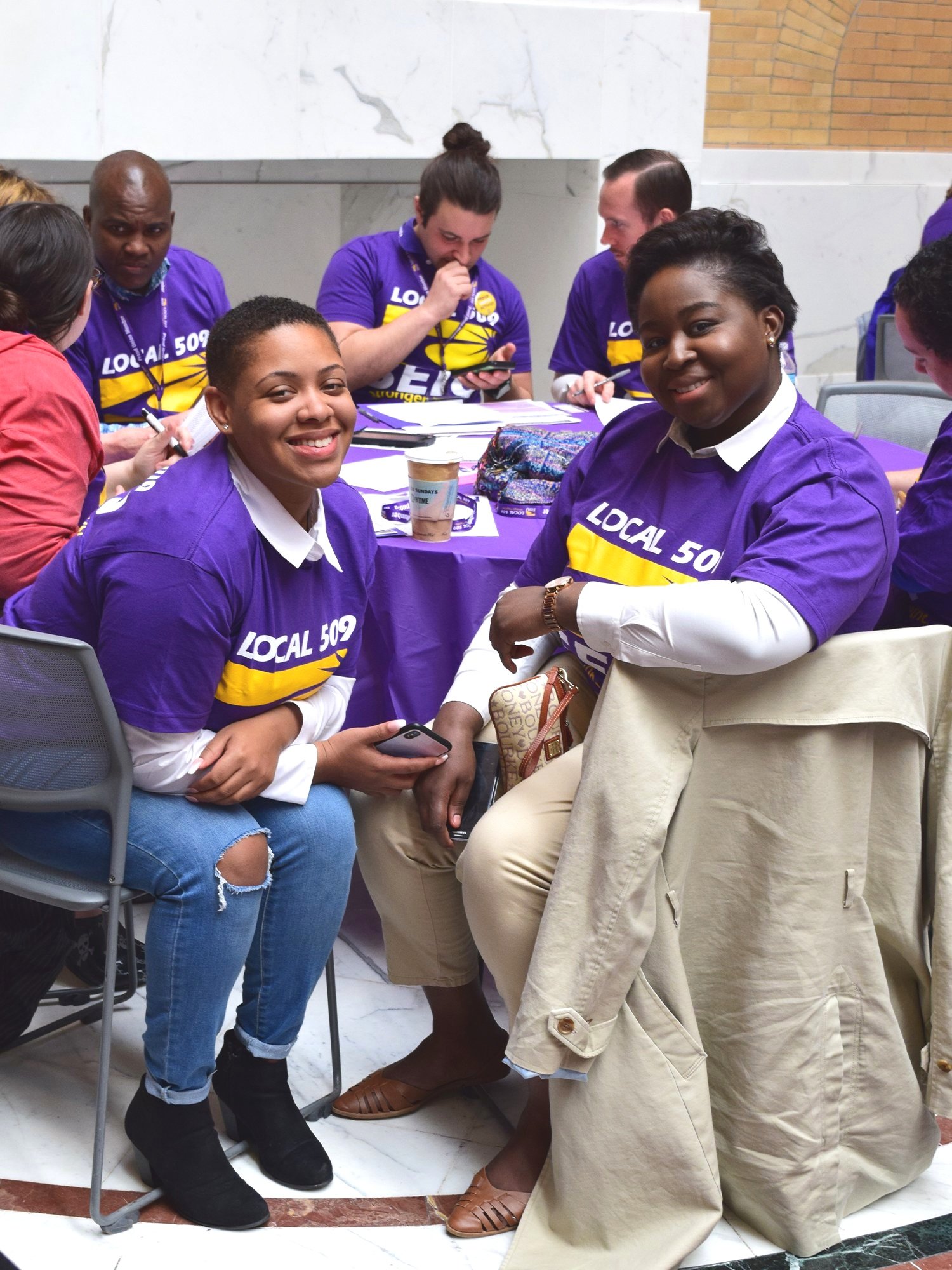

“ It was a very good training and I loved the presenters!! I learned so much and it gave the a more more appreciation and understanding of the community and the language!! THANK YOU so much! "
- Local 509 Member
Subscribe below to stay up to date with upcoming trainings, news and events.

